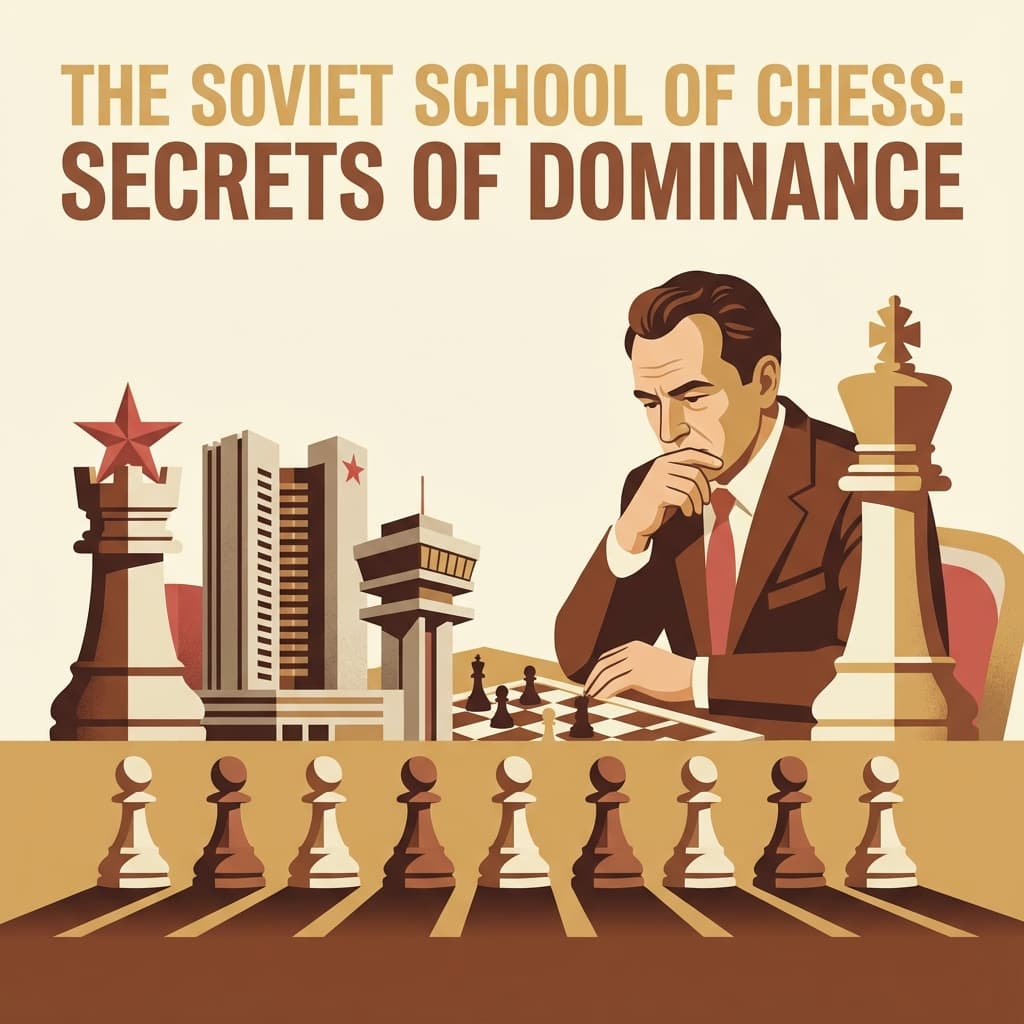
The Soviet School of Chess: Secrets of Dominance
For over 50 years, the Soviet Union dominated the chess world. From 1948 to 1991, they held the World Championship title almost uninterrupted. This wasn't an accident. It was the result of a state-sponsored system that treated chess not as a game, but as a science, a sport, and an art form.
What was their secret? And more importantly, what can modern club players learn from the training methods that produced Kasparov, Karpov, and Botvinnik?
1. Chess as a Discipline
The Mindset: In the West, chess was a hobby. In the USSR, it was a profession. Children were scouted early and placed in specialized schools (Pioneer Palaces).
The Lesson: Treat your study time with respect. Don't just play blitz while watching TV. Dedicate focused time to training.
2. The Analysis of One's Own Games
The Botvinnik Method: Mikhail Botvinnik, the patriarch of Soviet chess, insisted that students publish deep analyses of their own games. He believed you could not improve without understanding your own mistakes.
The Lesson: Never play a game without analyzing it afterwards. Your losses are your best teachers.
3. Physical Fitness
The Surprise: Soviet trainers understood that a healthy body supports a healthy mind. Top players were required to swim, run, or ski. Spassky played tennis; Karpov swam.
The Lesson: If you want to calculate well in the 4th hour of a game, you need stamina. Get moving.
4. The Study of Classics
The Foundation: Soviet students didn't just learn openings. They studied the games of the past masters. They knew how Capablanca converted endgames and how Alekhine built attacks.
The Lesson: Don't just study the latest engine lines. Read books on the great players of the past. Their ideas are timeless.
5. Endgame First
The Priority: While Western players often obsessed over openings, the Soviet School emphasized endgames. They knew that if you can't win a won position, the opening doesn't matter.
The Lesson: Spend more time on rook endings than on the Sicilian Najdorf.
Conclusion: The Soviet Union is gone, but its chess legacy remains. By adopting their disciplined, holistic approach to training, you can elevate your game from a casual pastime to a serious pursuit of mastery.
Ready to Take Your Chess to the Next Level?
Find experienced chess coaches who can help you master the concepts in this article and accelerate your improvement.
Browse Chess CoachesAbout the Author
Find Your Chess Coach ©
The Find Your Chess Coach team consists of chess enthusiasts, developers, and coaches dedicated to connecting players with the best instructors worldwide. We curate content to help chess players improve and find their perfect coaching match.