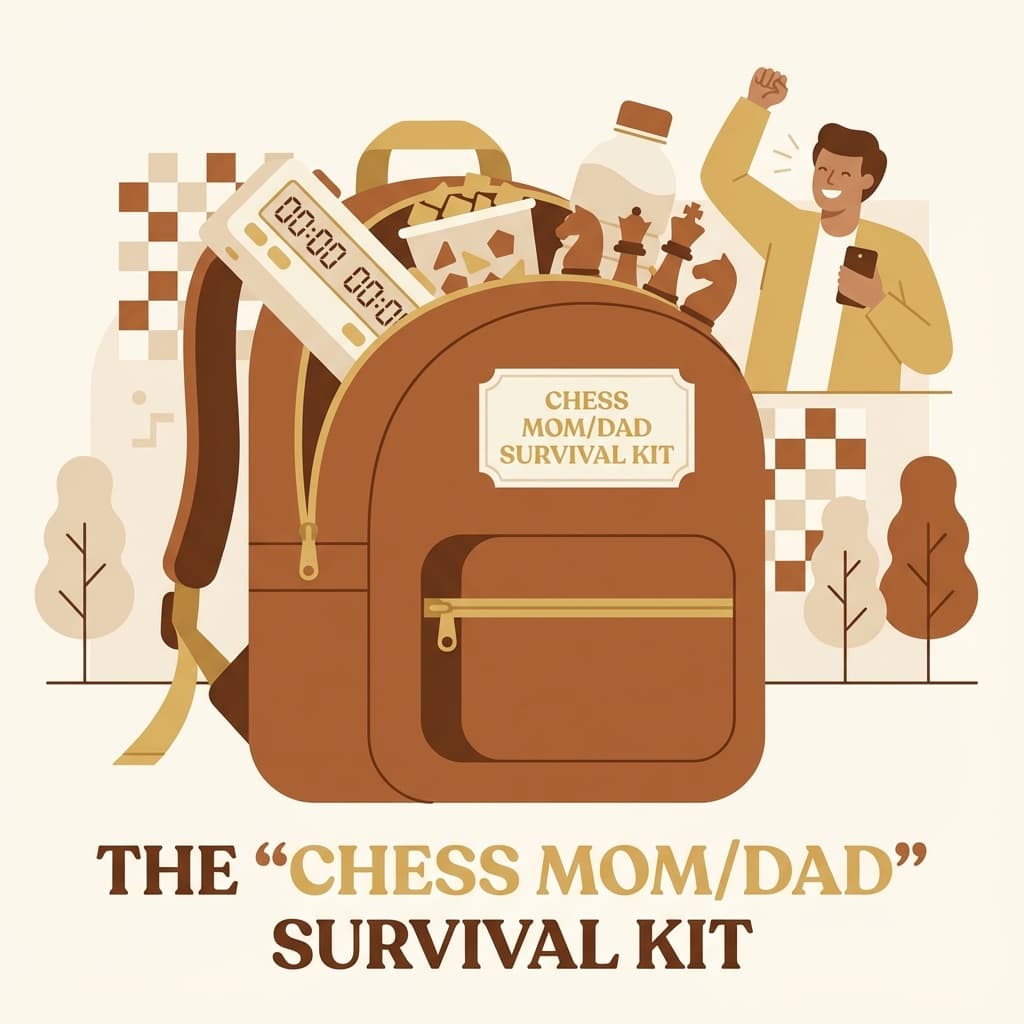
The "Chess Mom/Dad" Survival Kit
You signed your kid up for a chess tournament. You thought it would be like soccer: an hour of cheering, then home for lunch. You were wrong.
Chess tournaments are endurance events. They last all day (sometimes all weekend), involve hours of waiting, and are emotional rollercoasters. To survive, you need to be prepared.
This guide details the essential physical and mental tools every chess parent needs to get through the day with their sanity intact.
1. The Physical Kit
Snacks: Brain work burns calories. Pack healthy, non-messy snacks (nuts, fruit, granola bars). Avoid sugar crashes.
Water: Hydration affects concentration. Ensure they have a refillable bottle.
Comfort: Tournament halls are often freezing or boiling. Dress in layers. Bring a cushion for the hard metal chairs you will be sitting on for 8 hours.
Entertainment: You will be waiting. A lot. Bring a book, a fully charged phone, a power bank, and headphones.
2. The Mental Kit
Patience: Rounds can run late. Pairings can be delayed. Accept that you have no control over the schedule.
Silence: When your child comes out of a game, they might be exhausted or angry. Sometimes the best support is just being there, without asking 20 questions.
3. The "Waiting Game"
The Rule: You cannot see your child play. You are stuck in the waiting area.
Productivity: Use this time. Work remotely, read, or network with other parents. Do not pace outside the tournament hall door; it stresses your child out.
4. Post-Game Protocol
The First Question: Never ask "Did you win?" Ask "How was the game?" or "Did you have fun?"
Handling Tears: If they lose, validate their feelings. "I know you're disappointed. You fought hard." Do not offer tactical advice unless you are a strong player (and even then, wait).
5. When to Call in Reinforcements
The Limit: You can provide snacks and hugs, but you probably can't explain why they lost a Rook endgame.
The Solution: This is where a coach steps in. They can review the game, turn the loss into a lesson, and take the pressure off you. Platforms like findyourchesscoach connect you with mentors who can handle the chess side of things, letting you focus on being the supportive parent.
Conclusion: Being a chess parent is hard work, but watching your child grow in confidence and resilience makes every long weekend worth it. Pack your kit, settle in, and enjoy the journey.
Ready to Take Your Chess to the Next Level?
Find experienced chess coaches who can help you master the concepts in this article and accelerate your improvement.
Browse Chess CoachesAbout the Author
Find Your Chess Coach ©
The Find Your Chess Coach team consists of chess enthusiasts, developers, and coaches dedicated to connecting players with the best instructors worldwide. We curate content to help chess players improve and find their perfect coaching match.