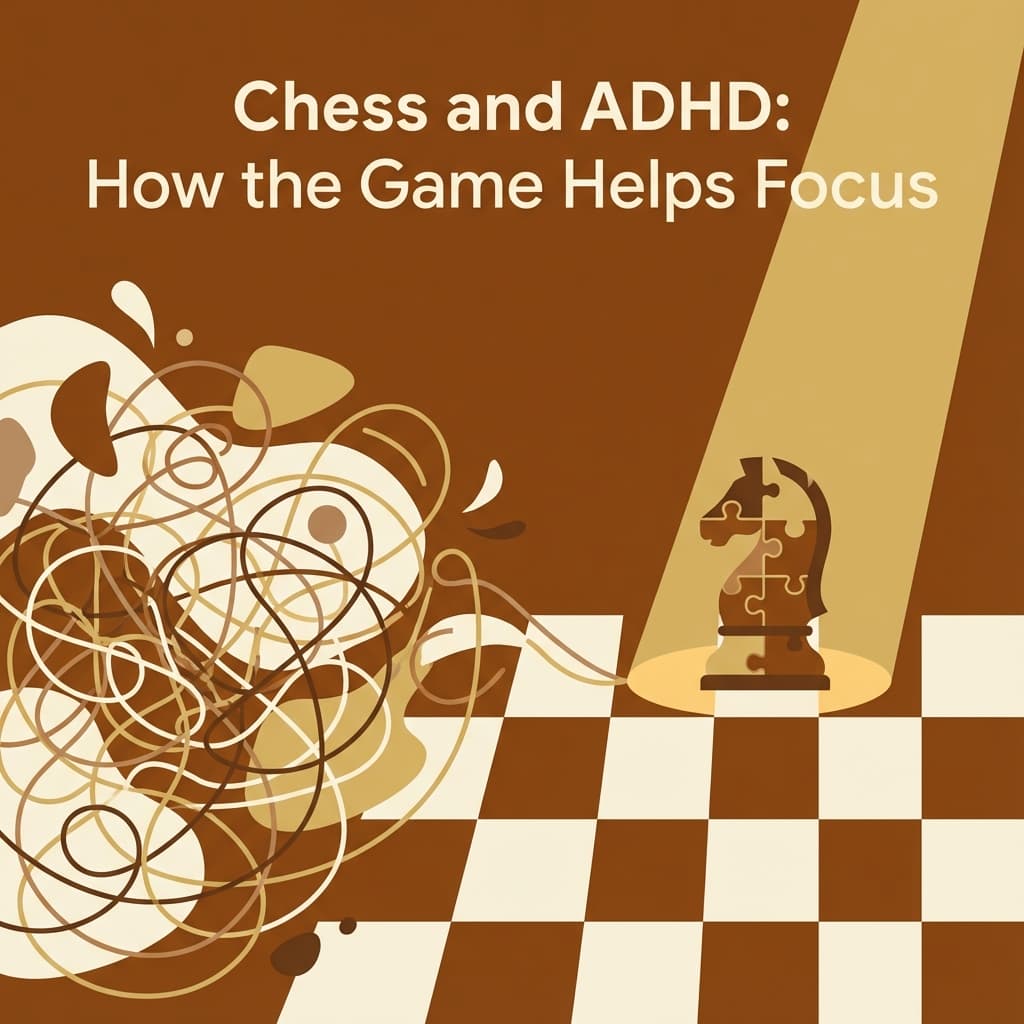
Chess and ADHD: How the Game Helps Focus
For a child (or adult) with ADHD, sitting still for 10 minutes can feel impossible. Yet, put a chessboard in front of them, and they might sit frozen for two hours. Why?
Chess is uniquely suited to the ADHD brain. It provides immediate feedback, constant novelty, and a structured environment for channeling energy. This guide explores how chess can be a powerful tool for building focus and executive function.
1. The Dopamine Loop
The Mechanism: ADHD brains crave stimulation. Chess provides a constant stream of problems to solve. Every move changes the position, creating a new puzzle.
The Result: This novelty keeps the brain engaged, releasing dopamine with every successful tactic found or threat parried. It turns "boring" focus into an exciting game.
2. Building Executive Function
Impulse Control: The "touch-move" rule is brutal but effective training. You cannot take back a mistake. This forces players to pause and think before acting, a skill that translates directly to life.
Planning: You cannot play chess move-by-move. You must plan ahead. This strengthens the brain's ability to organize thoughts and sequence actions.
3. The Hyperfocus Superpower
The Flip Side: ADHD isn't just a deficit of attention; it's an inability to regulate it. When interested, ADHD brains can enter a state of "hyperfocus."
In Chess: This allows players to calculate deep variations that neurotypical opponents might miss. It is a legitimate competitive advantage.
4. Challenges to Watch For
Time Trouble: Getting lost in thought can lead to flagging. Learning to manage the clock is a critical skill.
Boredom in Endgames: When the board simplifies, the stimulation drops. This is where focus often drifts.
5. Coaching Strategies
The Right Approach: Traditional "sit and listen" lectures don't work. ADHD students need interactive, fast-paced lessons.
The Solution: Coaches experienced with neurodivergent students use gamified drills, shorter time controls for training, and frequent breaks. Platforms like findyourchesscoach allow you to find mentors who understand these unique needs and can turn ADHD from a hurdle into a superpower.
Conclusion: Chess doesn't "cure" ADHD, but it provides a gym for the brain. It teaches that focus is a muscle, and with practice, it can be strengthened.
Ready to Take Your Chess to the Next Level?
Find experienced chess coaches who can help you master the concepts in this article and accelerate your improvement.
Browse Chess CoachesAbout the Author
Find Your Chess Coach ©
The Find Your Chess Coach team consists of chess enthusiasts, developers, and coaches dedicated to connecting players with the best instructors worldwide. We curate content to help chess players improve and find their perfect coaching match.