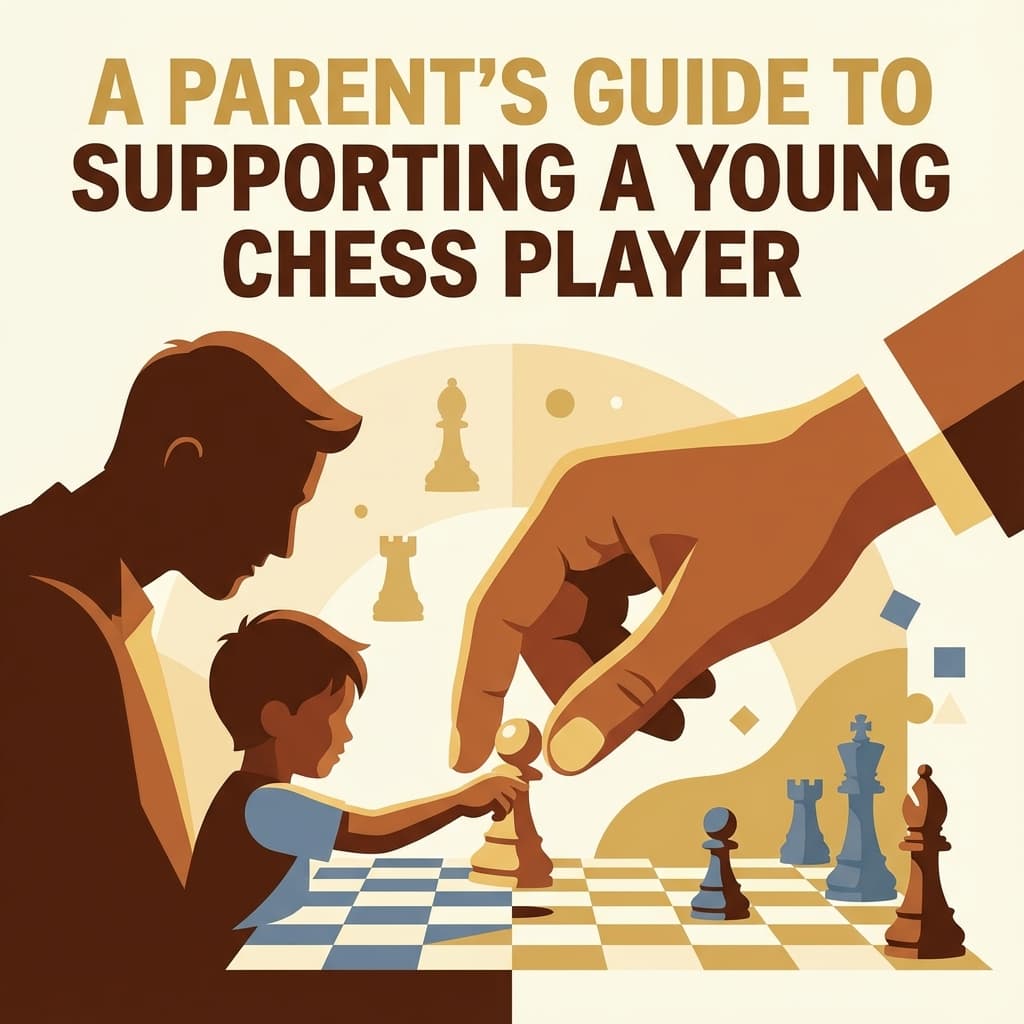
A Parent's Guide to Supporting a Young Chess Player
Your child shows interest in chess. Maybe they joined the school club, maybe they watched The Queen's Gambit, or maybe they just enjoy the game. As a parent, you want to support them, but you're not sure how.
Should you push or hold back? Hire a coach or let them figure it out? Force practice or let it stay fun? These questions plague every chess parent.
This guide provides a roadmap for navigating the world of scholastic chess, helping you foster your child's talent without extinguishing their passion.
1. The Role of the Parent
The Golden Rule: Be a parent first, a fan second, and a coach last (or never).
Cheerleader vs. Critic: Your job is to provide emotional stability. If they win, celebrate the effort. If they lose, offer comfort. Leave the technical analysis to the coach.
The Danger of "We": Avoid saying "We won" or "We need to work on our opening." It puts unnecessary pressure on the child. It is their journey, not yours.
2. Managing Wins and Losses
Emotional Resilience: Chess is brutal. In a tournament, 50% of the players lose every round. Tears are normal.
Reframing Failure: Teach your child that losing is not a reflection of their intelligence or worth. It is simply data showing what they need to learn next.
The "24-Hour Rule": After a tough tournament, give them space. Don't analyze the games immediately if they are upset. Wait until the emotions settle.
3. Tournaments: A Survival Guide
Preparation: Tournaments are long and exhausting. Pack healthy snacks, water, and non-chess entertainment (books, cards) for the breaks between rounds.
During the Game: You cannot help them. You cannot signal them. You must sit in the waiting area and wait. This is often harder for the parent than the child.
Post-Game Etiquette: Regardless of the result, the first thing you say should be: "I love watching you play" or "I'm proud of you for trying your best." Do not ask "Did you win?" immediately.
4. Balancing Chess and Life
Burnout Prevention: If chess becomes a chore, they will quit. Ensure they have other hobbies, friends, and downtime.
The "Push" Dilemma: It is okay to encourage practice, but if you have to force them to the board every single day, something is wrong. Motivation must eventually come from within.
School Comes First: Chess improves concentration and logic, which helps with school. But it should not replace homework or sleep.
5. When to Hire a Coach
The Right Time: When your child knows the basics, wants to improve, and is willing to sit and focus for 30-60 minutes, they are ready for a coach.
Why Coaching Matters: A parent can teach the moves. A coach teaches the thinking. They provide structure, identify bad habits early, and keep the game challenging.
Finding the Perfect Match: Every child learns differently. Some need a fun, high-energy teacher; others need a calm, structured mentor. Platforms like findyourchesscoach allow you to browse coaches specifically experienced in working with children, ensuring a safe and productive learning environment.
6. Resources and Tools
Online Play: Kid-safe modes on major chess sites allow them to play without chat or distractions.
Tactics Apps: Gamified puzzles (like "Puzzle Rush") are excellent for building pattern recognition in a fun way.
Books: Start with simple puzzle books. Avoid dense strategy manuals until they are older.
Conclusion: Supporting a chess kid is a marathon, not a sprint. Your goal is not to raise a Grandmaster, but to raise a happy, resilient child who loves the game. Provide the resources, offer the encouragement, and let them lead the way.
Ready to Take Your Chess to the Next Level?
Find experienced chess coaches who can help you master the concepts in this article and accelerate your improvement.
Browse Chess CoachesAbout the Author
Find Your Chess Coach ©
The Find Your Chess Coach team consists of chess enthusiasts, developers, and coaches dedicated to connecting players with the best instructors worldwide. We curate content to help chess players improve and find their perfect coaching match.